of live coral lost in one Indonesian archipelago, 1990–2022

early prototype
we're building a way to listen to reefs continuously, so blast fishing can be heard and located instead of guessed at.
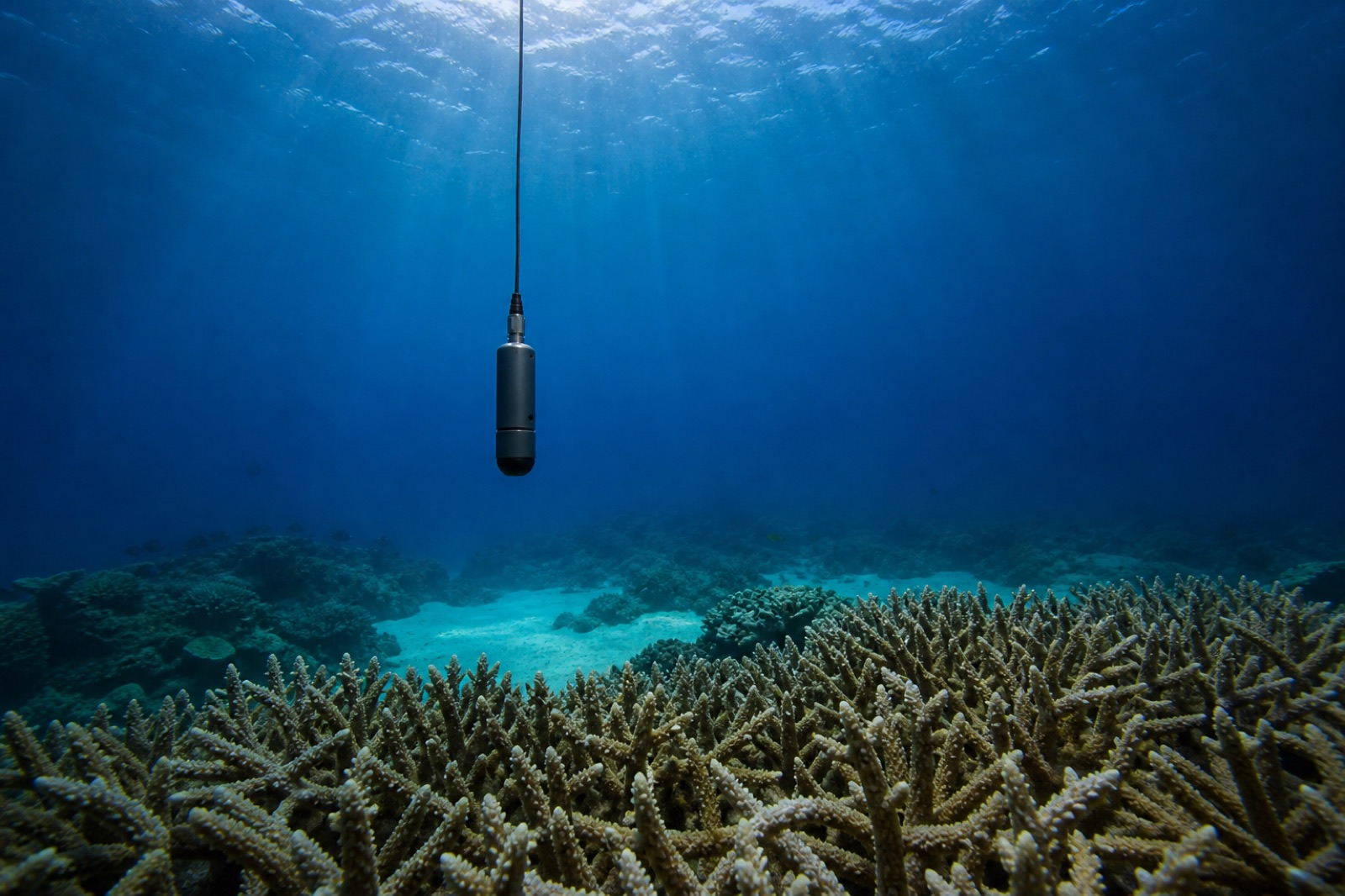
a hydrophone sitting near the reef, listening
the problem
the damage, in numbers
of live coral lost in one Indonesian archipelago, 1990–2022
radius killed or stunned by a single homemade bomb
reefs bombed decades ago that are still rubble today
figures from published field research in the Spermonde archipelago, Indonesia — not our own data. the 62-minute line above is derived from the same ~8,500/yr estimate.
blast fishing, throwing homemade explosives into the water, kills everything nearby and shatters the reef structure other species depend on.
it's illegal almost everywhere it happens, but oceans are vast and patrols are thin, so most blasts go unwitnessed and unrecorded.
the concept
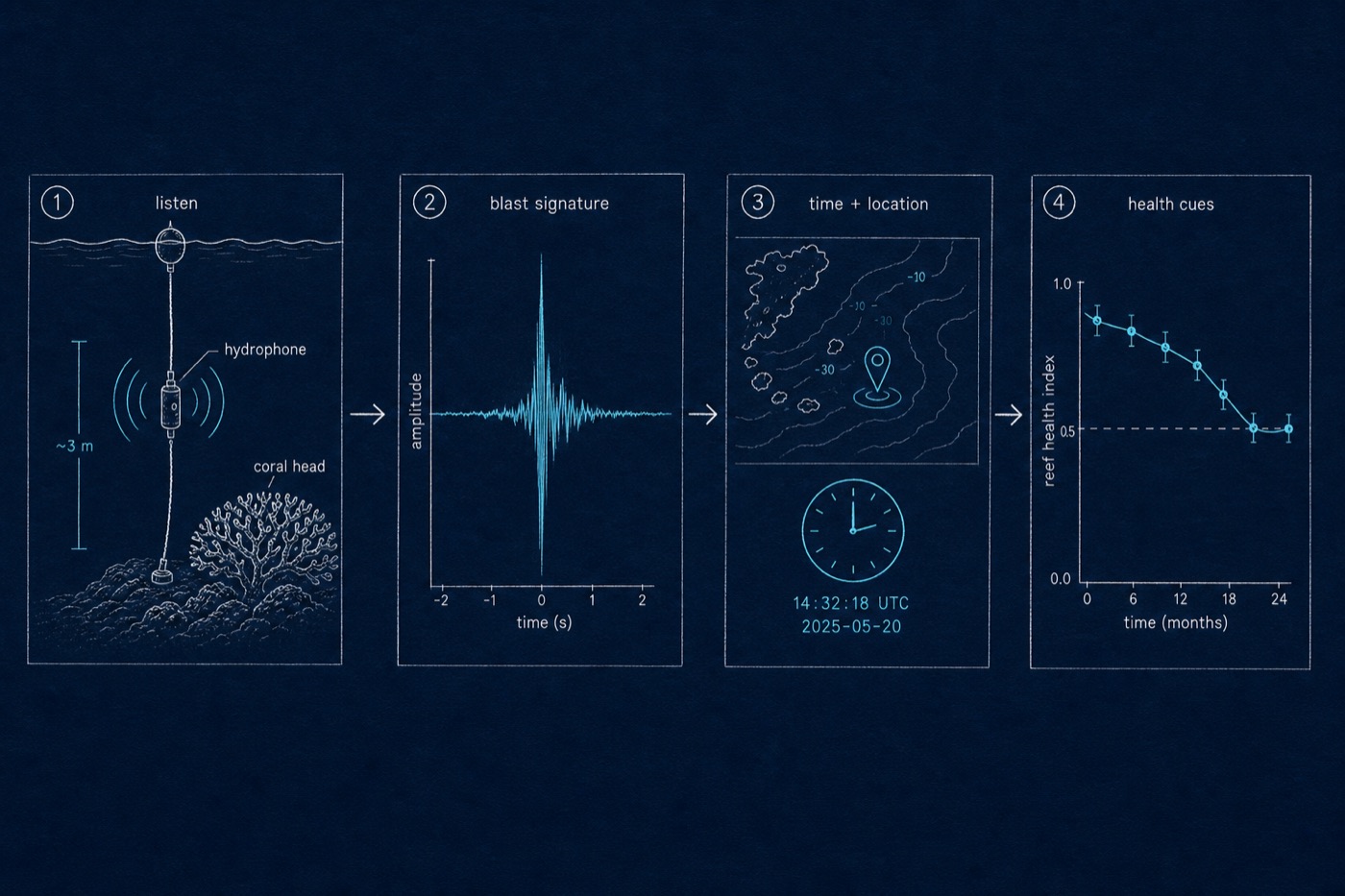
a hydrophone sits near the reef, listening
software scans the recordings for blast signatures
a detection is logged with time and estimated location
reef health cues are tracked as a side view
what it sounds like
a living reef crackles with fish and shrimp. a damaged one goes quiet. press play.
couldn't play this clip
recording © Tim Lamont
couldn't play this clip
a quiet, damaged reef
why sound
a microphone doesn't need to be in the right place at the right moment, unlike a patrol boat.
a timestamped recording is harder to dismiss than a secondhand report.